Author: zora

Forkin’ A: Profanity in Print

ffmontage2

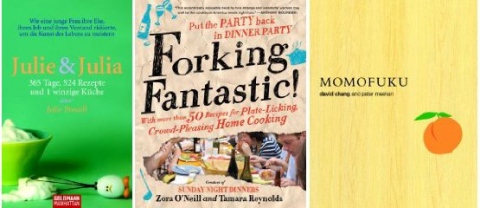
First, can I just say that it’s total bullshit that the only person who got to say ‘fuck’ in Julie & Julia was Stanley Tucci? I applaud Julie Powell for bringing female profanity to the bestseller list. I didn’t realize what an issue this was until mine and Tamara’s cookbook got its cover profanity euphemism (not even real profanity) cutesified, while men continue to get to write On Bullshit and Drink, Play, Fuck. (To be fair, though, at least inside the book we still swear plenty.)

And those of you who know me know that actually, I don’t swear all that much. Only when I’m really fucking pissed. Or excited. And occasionally when it might be funny.

Anyway, on to the matter at hand: Forking Fantastic! (nee F-ing Delicious) is in my hot little hands! A solid month before the proper release date.

That means you still have a month to trot on over to Amazon and preorder your copy. You know you want to. By the time it comes out, the weather will be good and autumnal, just right for baking the bad-ass ham we have in there.

And can I point out that this is almost certainly the only book on the market to use the phrase “like potluck, but for your ass”? Thank you, thank you, for your appreciation of my contributions to the English language. A check is most generous.

And finally, on the same profanity trajectory: There is going to be hella more Momofuku in my life! Not only is David “Foulest Language Ever Documented in the New Yorker” Chang’s cookbook coming out, but a new Momofuku is opening in midtown, in the Chambers Hotel, with a Vietnamese slant, no less. That is conveniently right on Peter’s commute back from John Jay and a dangerously short hop from Astoria. Expect us to weigh twice as much this time next year.

(BTW, in our cookbook…we have a bastardized version of David Chang’s miso butter. I’m just saying bastardized because it’s fun to say, but really…I think it’s a much better way of making it. Serious.)

Mexico Photos

They’re up, over on Flickr. If you jumped on it when I posted some last night, well, go back, because there are oodles more, plus short videos.

First of all, there’s the giant set of general photos, starting out with all the culinary treats, such as this one:

Pozol de Chocolate

(That’s the cold chocolate-corn breakfast thing I mentioned on Facebook. I don’t mind looking ridiculous in this photo because it was so damn good)

Oh, and:

Lap of Lunchery

Pollo asado tastes better when you eat it out of your lap.

Oh, and, and:

Tortilla Tastiness

Whoever it was in San Lorenzo de Zinacantan who thought it would be a good idea to offer tortillas to tourists after they buy some beautiful embroidery work–I salute you! These were the most amazing and simple tortillas, cooked right there, with this funky cheese and earthy ground pumpkin seeds. The taste of Pre-Columbia.

And near the end, there are a few short videos, like this one:

Oh, I’m giving it all away–go look at them all now!

Then there’s a set Peter took while walking around the block in Campeche: fantastic decay next to old-fashioned living rooms, and sometimes both in one place.

Campeche Block 5

And finally, for the typeface fans, a very small set of goofy fonts we saw.

Hero's

Happy browsing…

On the Road in Mexico

Here’s 3,000 kilometers in Chiapas, Tabasco and Campeche states, from my August trip: Peter at the wheel; Huichol Musical on the soundtrack.

Some notes:
00:05–Hi, sheep!
00:16–Yes, that’s a tuk-tuk! They’re all in the mountain villages where pedal-power triciclo taxis are too tough to manage.
00:22–Downtown Tapachula, with the “uno x uno” (‘one by one’=four-way stop) traffic sign.
00:36–Puente Chiapas, the huge long bridge across the huge wide river/dammed-up-lake between Chiapas and Tabasco. You can’t see it, but the back of the truck in front of us is filled with those rebar rocking chairs I love.
00:52–Villahermosa’s cathedral is unfinished–those spires are the most impressive part. Also love old Bug/new Bug in the same street.
01:04–Those are banana trees hiding behind the hedges. Acres upon acres of banana plantations, in Tabasco.
01:11–Don’t assume Mexico is all humid and hot. It was chilly in the mountains, even in August, and there was lots of fog.
01:17–That sign says “Slow down in the rain.” We didn’t take any chances.
01:40–I only took this clip because Peter seemed to be driving so fast. But through the miracle of video compression, we seem to be speeding along crazily in pretty much every clip.
02:03–I doubt Nissan tested the truck gate to hold the weight of four men….

Hurricane Katrina Anniversary: Read/Watch This

Four years ago, Peter and I were in a car in Nevada, driving through the driest wastelands imaginable and listening to the horrible news on the radio: New Orleans engulfed in floodwaters. It was riveting and awful to listen at such a remove. I think the only time we laughed was when they interviewed a Dutch hydrologist, who, in typical Dutch fashion, just simply could not understand how the Americans could fail to keep their lowlands dry.

Eventually our radio signal petered out, as we arrived at the gates of Burning Man. We spent the rest of the weekend wondering if New Orleans would still exist when we finally left our desert party.

Barely. And of course the news had only gotten worse by then.

We visited New Orleans in 2007, with friends who had the wisdom to get married in such a fine city. People were still traumatized, of course. But the spirit of the city was there. And very few people, driving very few cars, made it a wonderful place to ride a bicycle. Also because the people on foot weren’t shy about flagging you down to give you restaurant recommendations or ask, “You get that hat at Meyer’s?” (Peter’s hat, alas–not mine.) I wrote this then.

All a lot of preamble to say: read fellow Lonely Planet writer Adam Karlin’s essay in World Hum, “Yeah You Right: A New Orleans Manifesto.”

That should then spark your appetite for something a little meatier, and you should run to a bookstore and get Dan Baum’s Nine Lives. Dan (I can call him that, because I admit, I am friends with him and his razor-sharp editor of a wife, Meg Knox) has an excellent ear for New Orleans linguistic detail, and tells a beautiful story. The book isn’t so much about Katrina–it doesn’t get to that till near the end of the book–as about what makes the city so remarkable and resilient.

Even if you don’t buy the book this instant (though you should), click over to the Amazon page and look at his author photo. Yes, he got that hat at Meyer’s!

And for more on the flood itself, watch Trouble the Water. I was lucky enough to see this with the directors in attendance, along with the woman who shot so much of the footage on her video camera during the flood. And her boyfriend. And her baby. It’s gripping, and even though it documents a shocking failure and tragedy, has an amazingly positive outlook.

And perhaps after all that, you should buy yourself a plane ticket, especially if you’ve never been. And eat a po’ boy at Parkway for me.

Mexico: Not as Third World as You Think

Seriously. I left Cancun airport, all gleaming and shiny, with super-clean bathrooms, no lines and free ziplock baggies at security, to return to Miami, where I shuffled through gray, low-ceiling halls, past unexplained barriers and into immigration that looked like it had been wedged into a disused room. While I waited for my luggage, I went to a two-stall bathroom where the doors didn’t lock. Heading for my connecting flight, I could tell I was getting close to the security checkpoint because the hall smelled like stinky feet.

If you haven’t left the US in a while, I’ve got some news for you: We’re falling way behind. In Mexico, there’s free wi-fi in the parks. The roads are fabulously smooth. There are bike paths. People are talking about the economic crisis as something that happened months ago, when that whole swine flu thing got a little overhyped in the press, but things are getting back on track now.

And speaking of swine flu, the Mexican government is sure as hell doing a lot more about it than I ever saw in NYC at the peak of the panic. There are public health vans parked at every town plaza in the major affected zones. Everyone’s washing their hands twice as much as they used to. (And even that was twice as much as we do here in the US. In Mexico, the signs in the bathroom advise you to wash your hands after using the bathroom, of course, but also before you eat. Very wise. If more travelers did this, they wouldn’t get so sick.)

If you’re a little scared of going to Mexico because of everything you read in the news, don’t be. It is a huge country. The narco wars are happening in the equivalent of Detroit and Baltimore, which wouldn’t stop you from visiting, say, the Grand Canyon, right? Speaking of which, the Cañon del Sumidero in Chiapas–fantastic.

And speaking of Chiapas–yeah, everything’s fine there. That uprising? It happened in 1994. Same year Kurt Cobain died, just for perspective. Loooong-ass time ago.

Anyway, just had to get that off my chest before I go sort through all my photos. And an apology is due: I spent this whole trip on Facebook, instead of here. But you didn’t miss too much–there were very few ‘wacky hijinks of a guidebook writer’ episodes on this trip. I did realize that whereas I used to hate how hotel owners would chat my ear off, now I have become the annoyingly chatty one. Maybe that’s because I wasn’t funneling enough of my drive-time musing into my blog. Live and learn… And stay tuned for photos.

MtAoFC: BFD

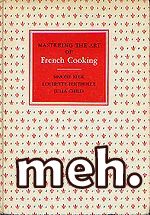
mtaofcThere, I said it. I really have never been at all swoony over Julia Child and Simone Beck’s Mastering the Art of French Cooking. I don’t typically bring it up in public, because then people shoot bloody daggers out of their eyes at you for speaking ill of Saint Julia, and they also then assume that you cook nothing but tuna-noodle casserole.
So let me be clear: Julia Child is perfectly delightful, and did a world of good for this country and its food culture. My father still speaks in hushed tones about the bad old days in the supermarket, when the only mushrooms you could buy were in a can. And I know and appreciate that the French have a fantabulous culinary heritage, and we should all learn to eat and drink in such a thoughtful way.

But MtAoFC is just not all that. I have never, ever flipped through it and thought, “Ooh, I’ll cook this.” In fact, I think the book has only served to reinforce my prejudice against French food, and how annoyingly special it seems to consider itself. Whenever I read a recipe in MtAoFC, I find myself thinking, “C’mon–really? Is all that shit necessary?” And you know I am not a dump-and-stir Rachael Ray type. I like spending time in the kitchen, and look for reasons to do so.

So it was interesting to read this little Julia Moskin book review in the New York Times today.

Moskin points out the fundamental problem with MtAoFC: it’s restaurant cooking. Child studied at a school for professional cooks (Le Cordon Bleu), and that’s what she relays in the book. As Moskin says, and I have said, restaurant cooking is wildly different from home cooking. Restaurant chefs prize consistency, perfectly velvety sauces and manically regularly cubed vegetables, and they have an army of people and gear to make that all happen.

Because of this, I have always been deeply skeptical of all restaurant cookbooks. But I guess I just don’t give enough of a crap about French food to ever have noticed that’s the same reason why MtAoFC rubs me the wrong way. I mean, sweet Christ, I have only peeled pearl onions once in my life, for a Greek stifadho, and I think that just might be enough.

And of course it’s great that the country is currently in the throes of Julia love, and people who’ve never cooked are inspired enough to march out to buy fatback and red wine and all that.

But how many people are going to get halfway through the boeuf bourguignon recipe, with every pot and pan dirty and no more counter space left and dinner still hours away, and say, “This is what cooking is?! Get me the hell out!” (Or, heaven forbid, they’ll cook the aspic.)

Moskin in the Times reviews a different French cookbook, I Know How to Cook, which focuses on home cooking skills. Totally hateful title, and ghastly chick-y cover, but even so: this one might finally get me on board with the whole French food thing.

Oh, and OK–I feel I should admit that in mine and Tamara’s forthcoming cookbook, there is a recipe for cassoulet, perhaps the pinnacle of ridiculous overrated Frenchiness. And the recipe references MtAoFC–which is, in fact, a very good reference…which is not the same as a very good book to cook out of. (I think we can safely say that whatever French business is in that book was Tamara’s idea.) But we worked hard to make sure the cassoulet isn’t just blindly following some overly complicated restaurant-y procedure. And as a result, I will probably never eat cassoulet again…

Preparing for Reentry

Back in the New York orbit on Sunday, finally. Gingerly dipping my toes in the current news.

Why does this not surprise me? I have long suspected food allergies were way overblown, especially for kids. File under Things I Have Always Believed to Be True, only because the Told You So file is already overstuffed, and nobody ever seems to read the stuff I put in there.

Mexico photos to be posted shortly…

Pollan on the Death of Home Cooking

I’m still in Mexico, and will be posting about that in a bit (once Peter leaves and I’m left to my own devices in the evenings).

In the meantime, don’t miss yet another fantastic article by Michael Pollan: Out of the Kitchen, Onto the Couch.

As usual, he manages to say everything I’ve been saying, but without ranting or getting depressed. The real tragedy of the current state of home cooking, in my mind, is that people who now want to learn to cook have virtually no home cooks to learn from–only fancy chefs. Home cooking is a very different skill set from restaurant cooking, and not nearly as intimidating as TV cheffery makes it seem.

I also love his point early on about the transubstantiation that’s central to cooking. It is a small art, and a small miracle, to transform ingredients. I talk about this a bit in the early parts of mine and Tamara’s cookbook, Forking Fantastic! (out Oct. 6, as if I’d let you forget).

More practically, cooking is perhaps the best arts-and-crafts project you can undertake–it’s done in an hour, and you don’t have the results cluttering up your house. But you still have the satisfaction of having completed something substantial, of having made something–which unfortunately is a feeling that’s very rare in a lot of our workdays.

New Mexico: A Guide for the Eyes

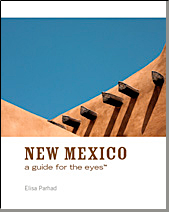
nmeyesI mentioned Elisa Parhad’s genius new guidebook idea a little while back, but now the book — New Mexico: A Guide for the Eyes — is finally out and for full-on sale.

It’s as savvy and beautiful as I’d expected. Love the turquoise-blue endpapers!

The premise: You’re driving around New Mexico and you notice there are an awful lot of drainage ditches. What’s up with that? Flip through and see the picture of an acequia–and you get all the background on Spanish-Arab irrigation techniques. The zia sun symbol, koshare, and chile ristras all get their due, along with other iconic things like enchiladas, smudge sticks, cowboy hats and biscochitos.

This guide is a total delight to read–and, just as important, it really helps you understand the essential cultural details about New Mexico.

I have just finished yet another guidebook where, in the name of meeting my word-count limits, I had to cut out 95 percent of the random interesting details I’d noticed about southern Spain to make room for opening hours and phone numbers.

I know this data is essential for a standard guidebook — but the kind of info you get from a guide like Elisa Parhad’s is just as key for really getting to know a place.

So…just buy two guidebooks. It’s worth it.

This is more a book for reading ahead of time, or looking up details after you get back home. It’s all glossy color photos, and hardbound in a nice little square trim size. For what it’s worth, there’s a one-page list of really good restaurants, attractions and museums in the back of the book–you’re smart enough to look these places up on your own.

Then, when you’re on the road and need quick reference to phone numbers, maps and opening times, take a black-and-white paperback like mine.

I’m looking forward to seeing the next guides in the series!